Phone
402-778-5055
Contact Email
adam@sipple.law
Working Hours
Mon - Fri : 8:00a - 6:00p

Blog

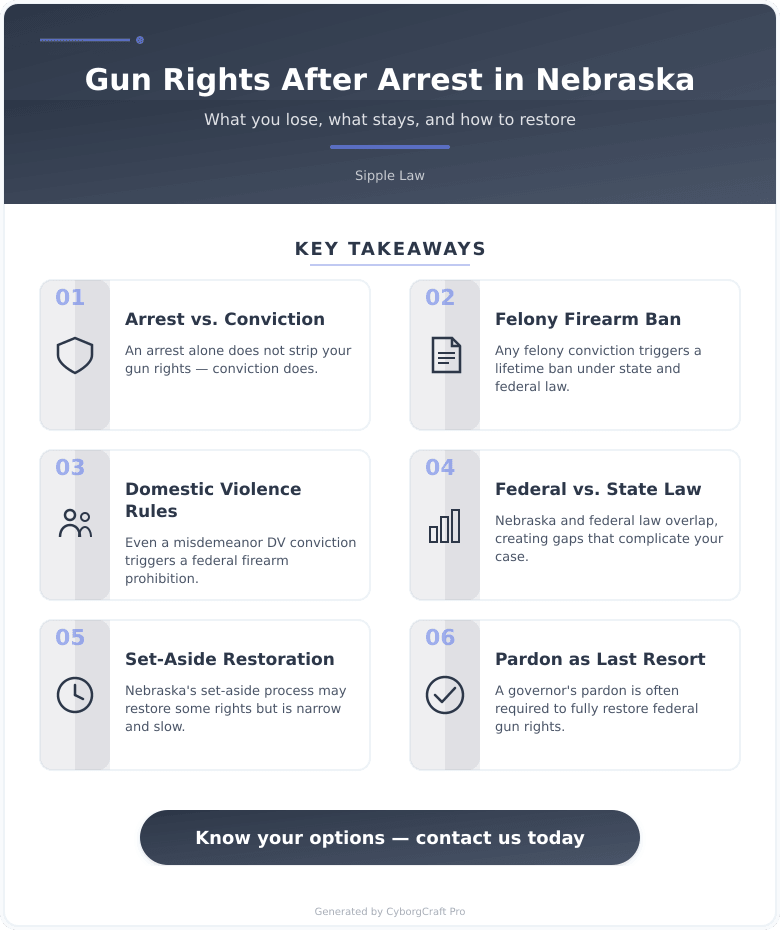
Infographic: Your Gun Rights in Nebraska After an Arrest - What You Could Lose and Whether You Can Get Them Back - Key concepts and takeaways

Your Gun Rights in Nebraska After an Arrest – What You Could Lose and Whether You Can Get Them Back

A criminal arrest or conviction in Nebraska can have serious, lasting consequences for your right to own or carry a firearm. While an arrest alone does not create a prohibition, a felony conviction or even a domestic violence misdemeanor can trigger both state and federal firearm bans. Nebraska offers limited pathways to restoration – primarily through the set-aside process and the Nebraska Board of Pardons – but federal law adds a layer that state action alone may not remove. Understanding these consequences before entering a plea is critical, as is knowing which charges carry the most severe restrictions. This breakdown covers who qualifies as prohibited, how Nebraska compares to neighboring states, and what steps you can take in 2025 to protect or restore your rights.

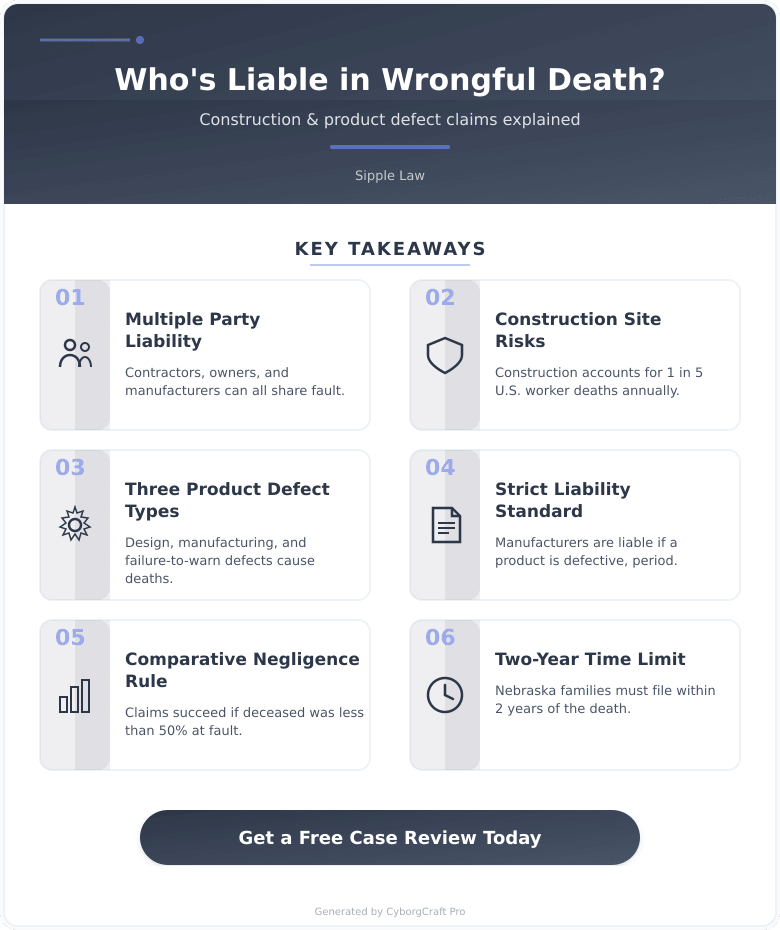
Infographic: Construction Sites, Product Defects, and Wrongful Death: Who Is Actually Liable When Someone Is Killed? - Key concepts and takeaways

Construction Sites, Product Defects, and Wrongful Death: Who Is Actually Liable When Someone Is Killed?

When someone is killed at a construction site or by a defective product, liability rarely falls on just one party. Construction deaths can involve general contractors, subcontractors, property owners, and equipment manufacturers simultaneously. Product defect claims in Nebraska operate under strict liability, meaning families do not need to prove a manufacturer was careless – only that the product was defective. Nebraska’s two-year statute of limitations for wrongful death claims makes early action critical. Families can recover economic and non-economic damages including lost income, funeral costs, and loss of companionship. Workers’ compensation is not the only option after a workplace death – third-party civil claims often expand what families can recover significantly.

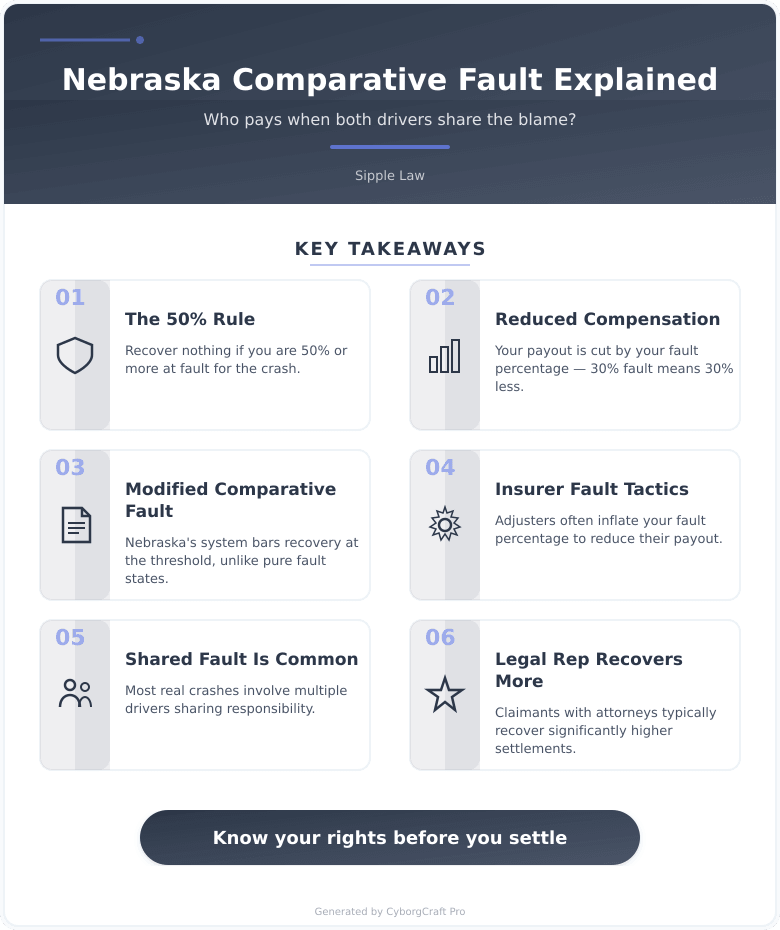
Infographic: Nebraska Comparative Fault Laws and Car Accidents - What Happens When Both Drivers Share the Blame? - Key concepts and takeaways

Nebraska Comparative Fault Laws and Car Accidents – What Happens When Both Drivers Share the Blame?

Nebraska’s modified comparative fault system allows injured drivers to recover damages even when they share some blame for an accident – but only if their fault is 49% or less. Once that threshold hits 50%, recovery is completely barred. This matters enormously in real accident claims because insurance companies frequently push fault percentages higher than the evidence supports. Understanding how fault is determined, what documentation strengthens your position, and how Nebraska’s rules compare to neighboring states like Iowa and South Dakota gives accident victims a clearer picture of what their claim is actually worth. Acting quickly, preserving evidence, and getting legal guidance before speaking with adjusters are the most important steps anyone in a shared-fault accident can take.

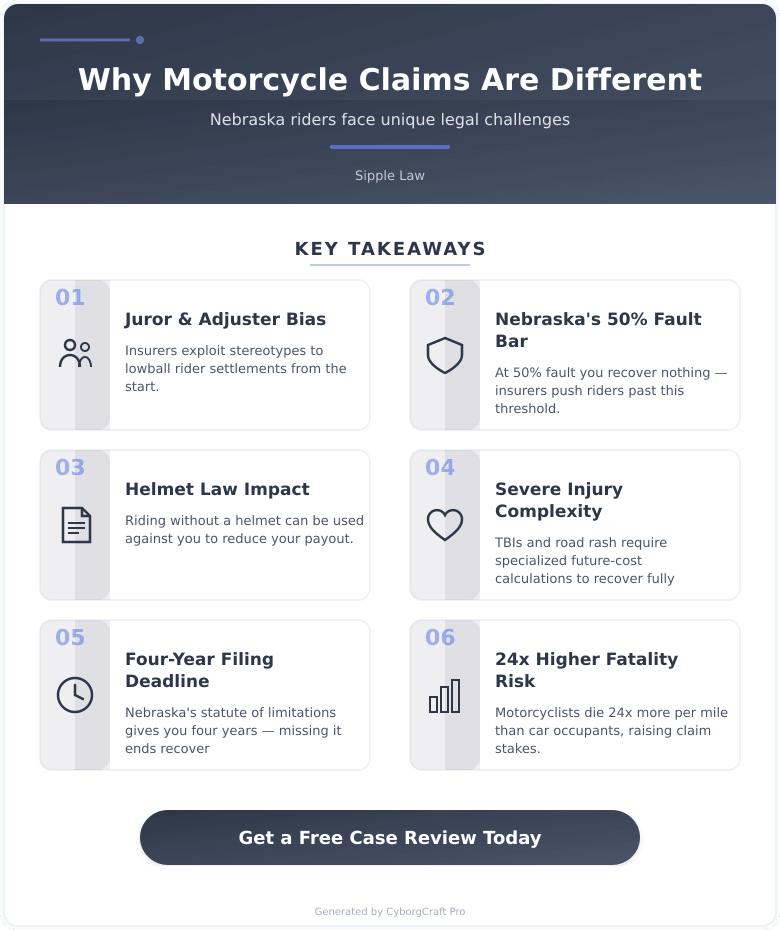
Infographic: Motorcycle Accidents Are Different - Here's Why Nebraska Riders Need an Attorney Who Knows That - Key concepts and takeaways

Motorcycle Accidents Are Different – Here’s Why Nebraska Riders Need an Attorney Who Knows That

Motorcycle accident claims in Nebraska carry distinct legal challenges that standard car accident cases simply don’t. Nebraska’s modified comparative fault system, which bars recovery at 50% fault, gives insurance companies a powerful tool to eliminate or slash rider compensation. Add in deep-seated bias against motorcyclists, unique injury profiles, and state-specific helmet laws, and you have a claim type that genuinely requires careful legal handling. Nebraska riders need to act quickly – preserving evidence, avoiding early recorded statements, and documenting every loss from medical bills to missed work. Understanding what makes these cases different, and connecting with the right legal support in Omaha and surrounding communities, puts injured riders in a far stronger position before any settlement conversation begins.

Infographic: Hit by a Semi in Nebraska? Here's Why Truck Accident Cases Are More Complicated Than Any Other Crash - Key concepts and takeaways

Hit by a Semi in Nebraska? Here’s Why Truck Accident Cases Are More Complicated Than Any Other Crash

Semi-truck accidents in Nebraska are far more legally complex than standard car crashes. Multiple parties can share liability, including the driver, trucking company, cargo loader, and manufacturer. Federal regulations governing driver hours, electronic logging devices, and post-crash testing create additional layers of evidence and legal exposure. Nebraska’s modified comparative fault rule means insurers will work hard to shift blame onto victims to reduce payouts. Critical evidence like black box data and driver logs can be erased or overwritten quickly, making early legal action essential. Understanding how these cases work, what evidence to gather, and how Nebraska statutes apply gives injury victims a real advantage in pursuing full compensation.

Infographic: Someone Is Spreading Lies About You or Your Business Online - When Defamation Law Actually Applies in Nebraska - Key concepts and takeaways

Someone Is Spreading Lies About You or Your Business Online – When Defamation Law Actually Applies in Nebraska

False statements posted online about you or your business can cause real harm – but not every lie qualifies as actionable defamation under Nebraska law. The distinction matters. Nebraska requires that a statement be a verifiable false fact (not just a harsh opinion), published to others, made with some level of fault, and that it caused actual harm. Private individuals face a lower legal burden than public figures, and certain statements – like falsely accusing someone of a crime – are considered harmful enough that specific financial damages don’t need to be proven. Nebraska’s one-year statute of limitations is strict, making early documentation and legal review critical. This covers what Nebraska defamation law actually requires, how online reviews and social media posts are evaluated, what damages are recoverable, and when professional legal help becomes necessary.

Red Flags That Mean You Need a Civil Rights Attorney Immediately

This post identifies critical warning signs that indicate you need immediate civil rights legal assistance. Covers workplace discrimination, housing violations, educational rights, police misconduct, modern technology-based discrimination, and healthcare access issues. Emphasizes the importance of early intervention before problems escalate and legal options become limited. Provides practical guidance on recognizing subtle discrimination patterns and understanding when uncomfortable situations cross legal boundaries.

What Trial Lawyers Won’t Tell You About Courtroom Strategy That Could Change Everything

This post reveals the hidden aspects of trial law that most people never see. It explains how 90% of a trial lawyer’s work happens outside the courtroom, why timing is crucial for building a strong case, and the psychological strategies that win trials. The content covers the real costs of self-representation and what actually happens during trial proceedings, providing valuable insights for anyone facing potential litigation.

87% of People Don’t Know This About Criminal Charges (It Could Save Your Future)

Most people facing criminal charges don’t understand how crucial their first decisions are. This post reveals what 87% of defendants don’t know about the criminal justice system, including how prosecutors build cases, why timing matters, and what questions you should really be asking. It explains how early intervention can change case outcomes and why understanding your options is critical for protecting your future.

The Best Time to File Your Appeal Is Right Now – Here’s Why

This post explains why timing is critical in filing appeals after unfavorable court decisions. It covers the 30-day deadline for appeals, what makes appeals successful in 2025, and why immediate action is necessary. The content emphasizes that appeals focus on legal errors rather than relitigating facts, and explains how Nebraska’s appellate system offers advantages for local cases. Written for people who recently lost cases and need to understand their appeal options quickly.